
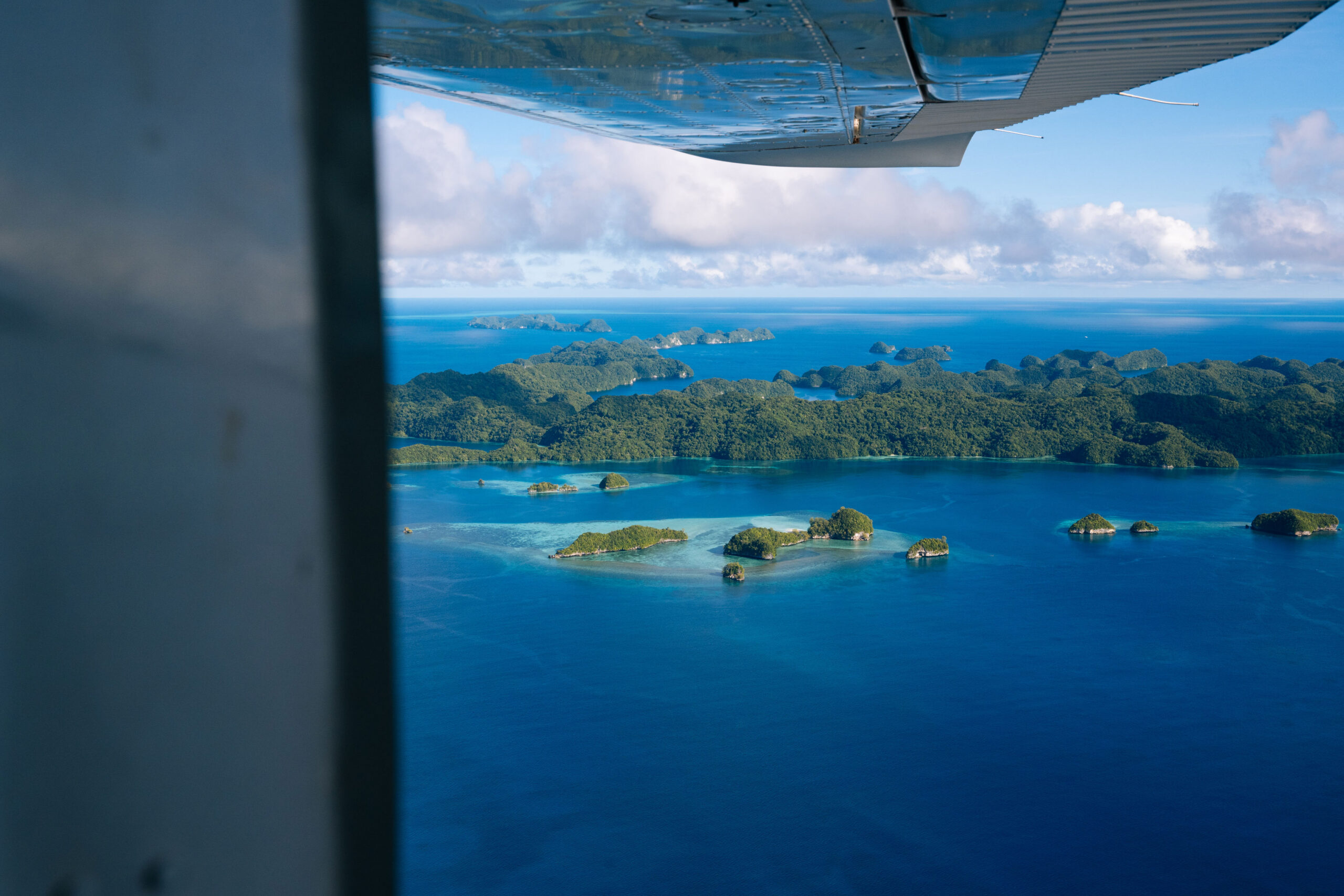
Prepare Your Trip
Everything you need to know before visiting paradise

Travel Documents and Entry Requirements
Passport
Your passport must be valid for at least six months beyond your intended date of departure from Palau. Ensure you have at least one blank page available for entry stamps.
Visa Information
Most nationalities receive a free visa on arrival valid for up to 30 days. Requirements can vary, so confirm with your airline or the nearest Palauan consulate before travelling.
The Palau Pledge
Upon arrival, every visitor signs the Palau Pledge — a commitment stamped directly into your passport. By signing, you promise to act in a way that protects and preserves Palau’s natural environment during your stay.
Arrival and Customs Forms
You will be required to complete an arrival card and customs declaration before clearing immigration. Forms are typically distributed on your flight or available at the airport.
Exit Tax
Palau charges a departure tax, which is usually included in your airline ticket. Verify with your carrier before travel to avoid surprises at the airport.


Getting to Palau
Flying to Palau
The main point of entry is Roman Tmetuchl International Airport (ROR) on Babeldaob Island. Direct and connecting flights are available from Manila, Tokyo, Taipei, Seoul, and Guam, among others.
Flight Duration
From Manila the flight is approximately 2 hours. From Tokyo it is around 3.5 hours, and from Taipei roughly 2.5 hours. There are currently no direct flights from Europe or North America.
Connecting Through a Hub
Most travellers from Europe or the Americas will connect via Manila, Tokyo, or Seoul. Build in a comfortable layover of at least 2–3 hours when booking connections.
Arriving at the Airport
The airport is small and straightforward to navigate. Taxis and hotel transfers are available outside the arrivals hall. Many resorts offer pre-arranged airport pickup — check with your accommodation in advance.


When to Visit
Dry Season (November to May)
This is generally considered the best time to visit. Expect sunny skies, calmer seas, and excellent visibility for diving and snorkelling.
Wet Season (June to October)
Palau still receives visitors during the wet season, and rain often comes in short, intense bursts rather than all-day downpours. Prices are lower and crowds are smaller. Diving conditions remain good, though visibility can vary.
Water Temperature
The ocean stays warm year-round, averaging between 27–30°C (80–86°F), making swimming and snorkelling comfortable in any month.
Jellyfish Lake Availability
Access to Jellyfish Lake can occasionally be affected by stinger jellyfish population cycles or conservation closures. Check current status before planning your visit around it.

What to Pack
Clothing
Palau is hot and humid year-round. Pack lightweight, breathable clothing — linen or moisture-wicking fabrics are ideal. A light rain layer is useful during the wet season. Modest dress is appreciated when visiting villages or local communities.
Sun Protection
Reef-safe sunscreen is not just recommended — it is legally required in Palau. Standard chemical sunscreens containing oxybenzone and octinoxate are banned to protect coral reefs. Pack a mineral-based (zinc oxide or titanium dioxide) sunscreen before you travel, as reef-safe options may be limited locally.
Water and Snorkelling Gear
A reusable water bottle is essential. If you have your own snorkel mask and fins, bringing them is worthwhile — rental equipment is available but quality varies.
Footwear
Bring water shoes or sandals suitable for rocky shores. A pair of lightweight walking shoes is useful for exploring inland trails and villages.
Electronics
Palau uses US-style power sockets (Type A/B) with 120V. Bring a universal adapter if travelling from Europe or elsewhere.

Health and Safety
Vaccinations
No vaccinations are officially required to enter Palau, but standard travel vaccines are recommended. Consult your doctor or a travel health clinic at least 4–6 weeks before departure.
Mosquitoes and Insects
Dengue fever is present in the region. Use insect repellent, particularly in the evenings, and wear long sleeves when possible. Malaria risk in Palau is considered low but worth discussing with your doctor.
Diving Safety
If you plan to dive, ensure you are properly certified and divs with a reputable local operator. Do not fly within 18–24 hours after your last dive. The nearest hyperbaric (decompression) chamber is located in Koror.
Medical Facilities
Palau has a public hospital in Koror. Facilities are adequate for routine care, but serious medical cases may require medical evacuation to the Philippines or Guam. Comprehensive travel insurance with medical evacuation cover is strongly recommended.
Water Safety
Tap water in Koror is generally considered safe to drink, but bottled or filtered water is advisable in more remote areas. Stay hydrated — the heat and humidity can be deceptively intense.

Respecting Palau’s Environment
The Palau Pledge
As a visitor you have already committed to the Pledge upon arrival. This means avoiding single-use plastics, not touching or standing on coral, and leaving no trace in natural areas.
Protected Marine Areas
Many of Palau’s reefs, lagoons, and dive sites fall within the Palau National Marine Sanctuary or other protected zones. Follow your guide’s instructions at all times and do not remove any shells, coral, or marine life.
Plastic and Waste
Palau has banned many single-use plastics including styrofoam and plastic bags. Carry a reusable bag and bottle throughout your trip. Dispose of waste responsibly — rubbish bins can be sparse in rural and natural areas.
Wildlife
Do not feed, chase, or attempt to touch wildlife — including marine animals. Keep a respectful distance from sea turtles, sharks, rays, and nesting birds.
Permitted vs. Protected Sites
Some islands, lakes, and trails require permits or are accessible only with a licensed guide. Check with your tour operator or the Palau Visitors Authority before exploring independently.

Money and Practical Information
Currency
The US Dollar (USD) is the official currency of Palau. There is no local currency.
ATMs and Cash
ATMs are available in Koror but limited elsewhere. It is wise to withdraw sufficient cash before heading to outer islands or remote areas. Not all businesses accept cards.
Credit Cards
Major credit cards (Visa, Mastercard) are accepted at most hotels and larger restaurants. Smaller guesthouses, local markets, and boat operators may be cash-only.
Tipping
Tipping is not a strong local custom, but it is appreciated for good service, particularly with dive guides and resort staff. A small tip of 10% in restaurants is thoughtful but not obligatory.
Internet and Phone
Mobile data coverage (4G) is available in Koror and some populated areas. Coverage drops off significantly in outer islands. Wi-Fi is available at most hotels and resorts. Local SIM cards can be purchased at the airport.
Time Zone
Palau operates on Palau Time (PWT), which is UTC+9. There is no daylight saving time.
Culture and Local Etiquette
Greetings and Courtesy
Palauans are warm and welcoming. A simple smile and greeting go a long way. Use respectful titles when addressing elders, and avoid interrupting or speaking loudly in traditional or community settings.
Village Etiquette
When visiting villages, dress modestly — avoid swimwear or revealing clothing. Always ask permission before photographing people, homes, or ceremonies.
The Role of Chiefs and Tradition
Palauan society is structured around a traditional chiefly system. Local customs and decisions made by community leaders carry significant weight. Respect any posted rules or community notices you encounter.
Gender Roles and Matrilineal Society
Palauan culture is matrilineal — family identity and land rights are passed through the mother’s line. Women hold important social and cultural roles, and this is reflected in everyday community life.
Buying Local
Supporting local artisans, food vendors, and tour guides is one of the most meaningful things a visitor can do. Look for handmade items such as storyboards — a traditional Palauan art form depicting legends and history.
Accommodation
Where Most Visitors Stay
The majority of hotels, guesthouses, and resorts are concentrated in and around Koror, Palau’s main town. Koror makes a practical base — it has the best access to restaurants, shops, dive operators, and boat departures to the Rock Islands and outer reefs.
Dive Resorts
Palau is a world-class dive destination and several resorts are built around the diving experience, offering on-site dive shops, equipment rental, and daily boat trips. These tend to be the most full-service options but also the most expensive. Book well in advance, particularly for peak season.
Guesthouses and Budget Options
A growing number of locally owned guesthouses offer comfortable, affordable stays in and around Koror. These are often the best way to support local families directly and can offer a more personal experience than larger resorts.
Liveaboards
For serious divers, liveaboard boats allow you to sleep on board and dive multiple sites across Palau’s waters over several days. This is the best way to reach more remote dive locations. Availability is limited so early booking is essential.
Outer Islands
Accommodation on outer islands such as Peleliu or Angaur is very limited and basic. If you plan to explore beyond Koror, research options carefully and confirm availability before finalising your itinerary.
Booking Tips
Most properties can be booked through standard platforms (Booking.com, Expedia) but contacting smaller guesthouses directly often yields better rates. Always confirm what is included — some dive resorts quote per-person rates that include meals and diving packages.
Getting Around Palau
No Public Transport
Palau does not have a public bus system. Getting around requires either renting a vehicle, using taxis, arranging transfers through your accommodation, or joining organised tours.
Rental Cars
Renting a car is the most flexible way to explore Babeldaob — Palau’s largest island, home to the capital Ngerulmud, waterfalls, and traditional villages. Roads are generally in good condition on the main routes. An international driving permit is recommended alongside your national licence.
Credit Cards
Major credit cards (Visa, Mastercard) are accepted at most hotels and larger restaurants. Smaller guesthouses, local markets, and boat operators may be cash-only.
Taxis
Taxis are available in Koror and are the easiest option for short trips around town. Agree on a fare before setting off as meters are not always used. Your hotel can usually arrange a reliable driver.
Boats
Many of Palau’s most iconic destinations — the Rock Islands, Jellyfish Lake, dive sites, and outer islands — are only accessible by boat. Most visitors join day tours operated by licensed local companies, which include boat transport, a guide, and often lunch. Private boat charters are also available.
Organised Tours
For first-time visitors especially, joining guided tours is strongly recommended. Local operators know the waters, tides, permit requirements, and safety considerations that are difficult to manage independently. Tours are available for diving, snorkelling, kayaking, cultural visits, and island hopping.
Getting Between Islands
Inter-island travel beyond day trips relies on small boats or, in some cases, light aircraft. Transport to outer islands like Peleliu can be arranged through local operators but schedules are irregular — plan with flexibility built in.
Ready to Explore?
Your Adventure Starts Here
You are now equipped with everything you need to visit Palau responsibly and make the most of your time on these extraordinary islands. Whether you are here for the diving, the history, the culture, or simply the stillness — Palau will leave a mark on you.
Plan Ahead
Book tours, permits, and accommodation in advance, particularly if travelling during peak season (December to March). Popular sites like Jellyfish Lake and the Rock Islands can get busy.
Stay Curious
Take time to talk to locals, explore beyond the main dive sites, and learn a few words of Palauan. The islands reward those who travel slowly and with intention.
Leave Only Footprints
Carry your pledge with you — literally and in spirit. The future of these islands depends on every visitor choosing to protect rather than take.